How to Decode a Classic (Pre-1981) Car VIN
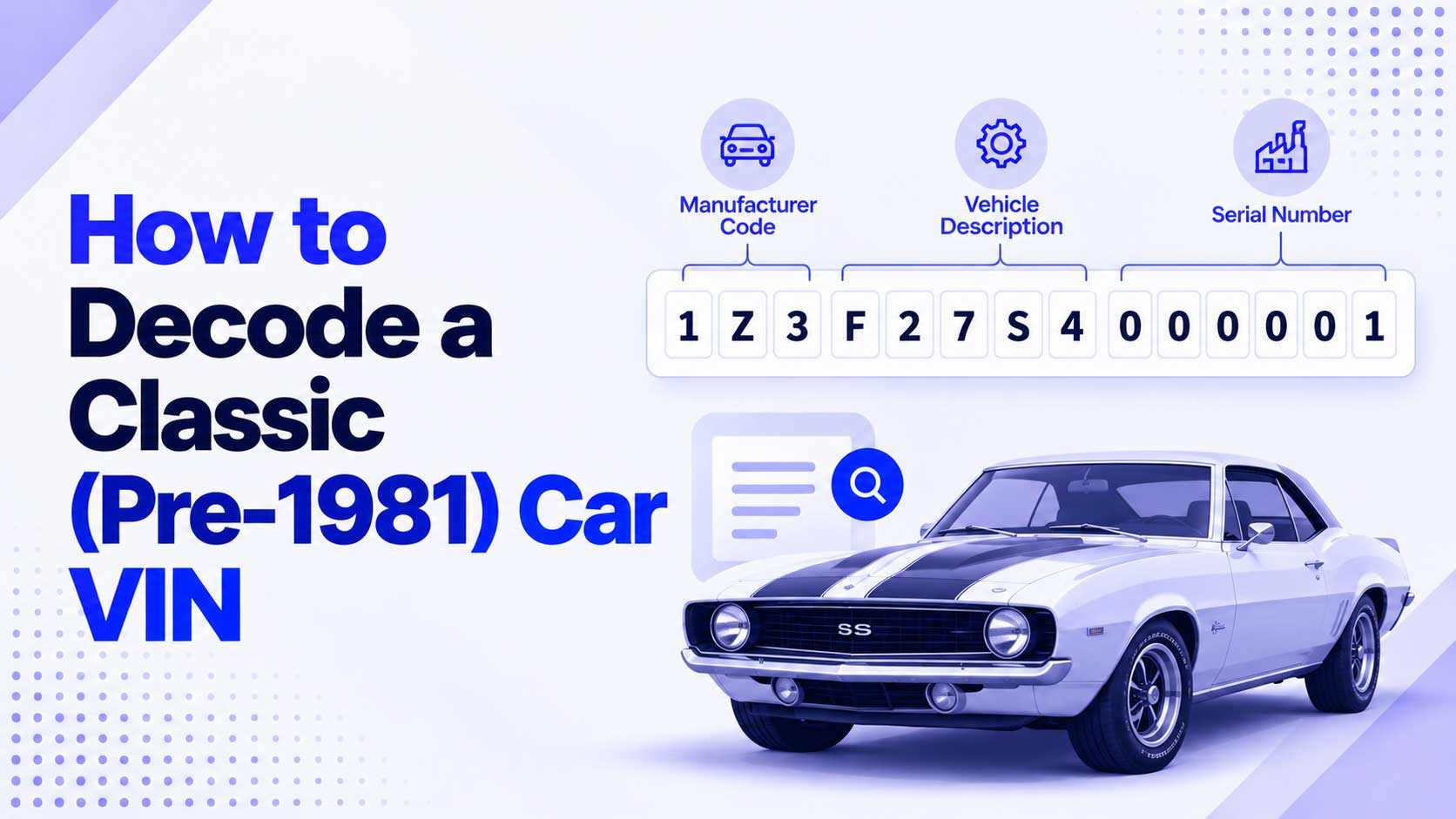
Try to run a 1968 Mustang’s number through a modern VIN decoder and it will not work. That is not a bug. Before 1981, there was no standard VIN, so a classic car’s identification number follows its own maker’s rules, not the 17-character format we use today. Decoding one means switching approaches entirely. Here is how pre-1981 VINs work and how to read yours.
Why Your Classic’s VIN Looks Different
The 17-character VIN became mandatory in 1981. Before that, every manufacturer used its own numbering scheme, and they varied wildly:
- Length was not fixed. Pre-1981 numbers ran anywhere from around 5 to 13 characters, depending on the maker and year.
- There was no shared meaning. The same character position meant different things on a Chevrolet than on a Volkswagen.
- There was no check digit. The self-verifying math that modern VINs use did not exist yet.
So a classic VIN is really a manufacturer-specific serial and model code, not a standardized VIN in the modern sense. That is why our VIN Decoder, which reads the post-1981 standard, cannot decode it, and why a modern VIN Validator will flag it as invalid. Neither tool is wrong; the number simply predates the rules they check.
Modern vs. Classic at a Glance
| Feature | Pre-1981 | 1981 and later |
|---|---|---|
| Length | Varies (about 5-13) | Always 17 |
| Format | Maker-specific | ISO 3779 standard |
| Check digit | None | Yes (position 9) |
| Decodes in modern tools | No | Yes |
How to Decode a Pre-1981 VIN
Because there is no universal formula, you decode by manufacturer:
- Identify the make and rough year first. You usually already know these for a classic. They determine which chart applies.
- Find the number on the car. On older vehicles it may be on a plate on the dashboard, the door post, the firewall, or the engine bay. Our guide on where to find your VIN covers the common spots, though exact locations vary by era.
- Use a marque-specific decoding chart. Each maker documented what its characters meant for a given year: the plant, the body style, the engine, and the sequence. These charts are what actually translate the number.
- Check the number against the car. On many classics the number also encoded the engine or body type, which helps confirm the car is what it is presented as.
Where to Find the Right Chart
The reliable sources for classic decoding are usually enthusiast-run:
- Marque clubs and registries for the specific brand, which often publish detailed year-by-year decoding guides.
- Model-specific forums where owners have compiled plant codes and body tags.
- Restoration references and factory documentation for that make and era.
A modern, general-purpose decoder cannot help here, so aim for a source dedicated to your exact make and year. That is where the real translation lives.
The Transition Years
Some manufacturers moved toward longer, more structured numbers in the late 1970s, ahead of the 1981 mandate. So a 1978 to 1980 car might have a number that looks closer to a modern VIN without fully following the standard. Treat anything before 1981 as maker-specific and verify against that brand’s chart rather than assuming the modern rules apply. For the year codes used once the standard arrived, see our VIN model year codes chart.
What About Modern Replacements?
If a classic has been through certain restorations or title processes, it may have been assigned a modern, state-issued replacement number in addition to its original. That replacement follows current rules and behaves like a standard VIN. The original factory number, though, still needs the classic, maker-specific approach.
Start With What You Know
Decoding a classic VIN is less about tools and more about matching the number to the right manufacturer chart. Confirm the make and year, find the number on the car, and use a source dedicated to that marque. For how the modern system that replaced all this works, see how to read a VIN and the story behind it in the history of the VIN.
Keep Reading
- The History of the VIN: Why 17 Characters?
- How to Read a VIN: What All 17 Characters Mean
- VIN Model Year Codes: The Full Chart (1980-2031)
- Where to Find Your VIN: Every Location on Your Vehicle
Free VIN tools: VIN Generator · VIN Decoder · VIN Validator · Bulk Generator · QR Code Generator · Barcode Generator · Visualizer