How to Check a Car's Odometer History by VIN
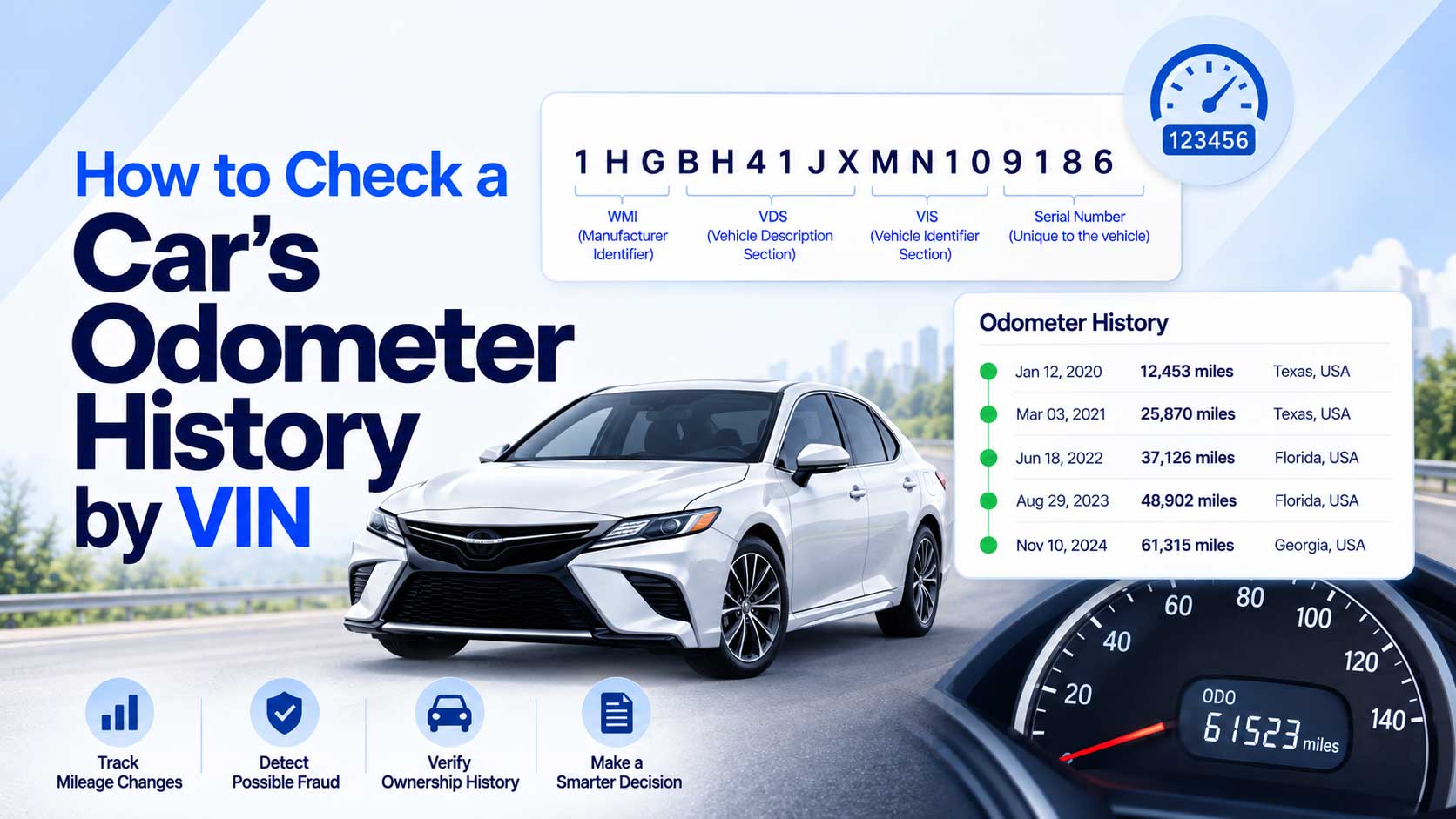
Mileage is one of the biggest factors in a used car’s value, which makes it one of the most tempting things to fake. Odometer rollback, winding the miles back to make a car look less used, still happens, and it costs buyers real money. The VIN is how you fight it. Mileage readings get recorded against the VIN over a car’s life, and comparing them reveals whether the number on the dash is believable. Here is how to check.
Mileage Is Recorded Against the VIN
Every time a car changes hands, gets inspected, or is serviced at many shops, someone often records the odometer reading along with the VIN. Those readings pile up over the years into a mileage history. The VIN does not store the mileage itself, but it is the key that ties each reading to the car.
That history is what exposes a rollback. If a car showed 90,000 miles at a sale two years ago and reads 70,000 today, the number has been tampered with. Before you check anything, confirm the VIN is genuine with our VIN Validator, so you are reading the right car’s history.
Where Odometer Readings Come From
Mileage gets captured at several points, and reports pull from these sources:
| Source | When mileage is recorded |
|---|---|
| Title transfers | Every ownership change |
| State inspections | Annual or biennial safety/emissions checks |
| Service records | Oil changes and repairs at many shops |
| Auction records | When a car is sold at auction |
| Insurance/total-loss | During claims and appraisals |
No single source has every reading, but together they build a timeline. A federal law requires mileage disclosure at sale, which is why title transfers are such a reliable data point.
How to Check the History
- Get the VIN from the dashboard, door jamb, or title. See where to find your VIN.
- Validate it with our VIN Validator so the readings belong to the right car.
- Pull an NMVTIS report. It includes odometer readings recorded at title events, and it is cheap.
- Buy a paid history report if you want more readings over time. See free vs. paid VIN history reports for what each covers.
- Compare the readings. They should climb steadily. A drop, or a long flat stretch, is a warning.
Signs of Odometer Fraud
The paperwork is not the only tell. When you see the car in person, check whether the mileage matches its condition:
- A reading that drops between two recorded dates. This is the clearest proof.
- Worn pedals, seats, and a shiny steering wheel on a “low-mileage” car.
- A worn driver’s seat bolster that does not match 30,000 claimed miles.
- Stone chips and wear on a car said to have barely been driven.
- Loose or misaligned dashboard trim near the instrument cluster, a sign it was opened.
- Service stickers or records showing higher mileage than the dash.
Roughly 12,000 to 15,000 miles a year is typical. A car far below that for its age deserves a closer look.
Digital Odometers Are Not Safe
People assume digital odometers cannot be rolled back. They can. Tampering tools that rewrite the stored value exist, so a digital display is not proof on its own. The defense is the same: compare the current reading against the recorded history and the car’s physical condition. The history is what a rollback cannot easily rewrite.
What to Do If the Mileage Does Not Add Up
If the history shows a drop or the car’s wear does not match the dash, do not just haggle the price down. A rolled-back odometer is fraud, and it often travels with other hidden problems. Ask the seller to explain the gap in writing. A genuine mistake, like a replaced instrument cluster, will have paperwork showing the true mileage and the swap date. If the seller cannot account for it, treat the whole listing as untrustworthy and move on. You can also report suspected odometer fraud to your state’s motor vehicle department or the relevant consumer-protection agency.
Start With the VIN
An odometer reading means little by itself. Checked against a VIN’s recorded mileage history, it tells you whether to trust the seller. Confirm the VIN with our VIN Validator, decode it with the VIN Decoder to match the listing, then pull the mileage history and compare. If the numbers do not climb the way they should, walk away.
Keep Reading
- Free vs. Paid VIN History Reports: What Each Gives You
- How to Check a Car’s Accident History by VIN
- How VIN Cloning Scams Work (and How to Protect Yourself)
- Where to Find Your VIN: Every Location on Your Vehicle
Free VIN tools: VIN Generator · VIN Decoder · VIN Validator · Bulk Generator · QR Code Generator · Visualizer