How to Find and Check a Chassis Number in India
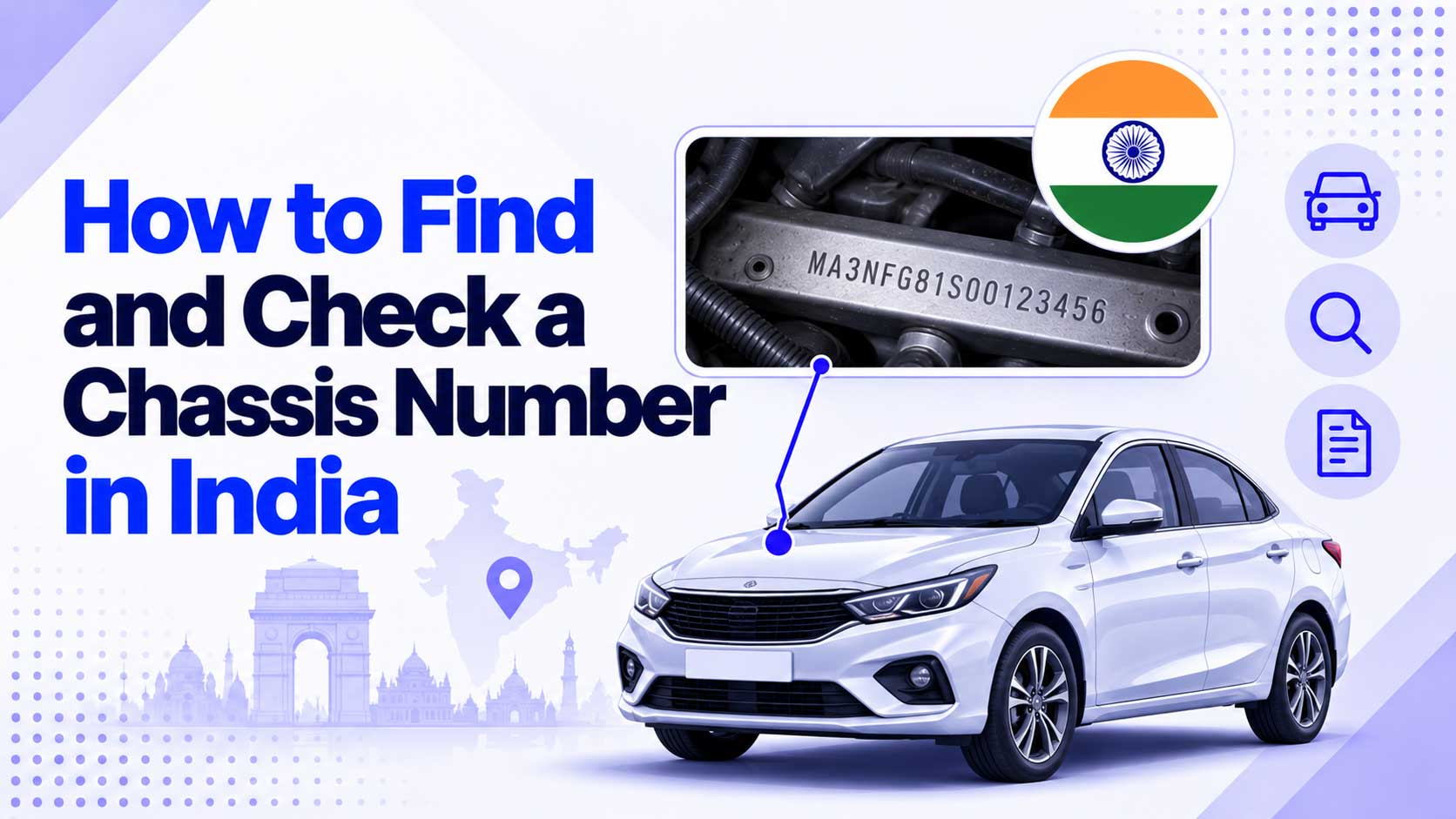
Buying a used car in India means two numbers come up in almost every conversation: the chassis number and the engine number. Both are on the RC. Both need to match the car. And plenty of buyers mix them up, which is exactly how a bad deal slips through.
Here is what each number is, where to find it on the car, and how to check both before you pay.
Chassis Number vs VIN: Same Thing?
In everyday Indian use, yes. The RC and insurance papers say “chassis number,” while the car’s own plate may say “VIN.” For a modern car they point to the same 17-character code. If you want the bigger picture of how other countries name it, see what a VIN is called around the world.
The thing that is genuinely different is the engine number.
Chassis Number vs Engine Number
| Feature | Chassis number (VIN) | Engine number |
|---|---|---|
| What it identifies | The whole vehicle | Only the engine |
| Format | 17 characters on modern cars | No fixed length or format |
| Where it sits | Body or frame, dashboard plate | Stamped on the engine block |
| Changes over time? | No, it stays with the car | Yes, if the engine is replaced |
The practical point: the chassis number is the car’s identity. The engine number can legitimately change, but a changed engine should be recorded with the RTO. If the engine on the car does not match the RC and nobody can explain why, that is worth stopping for. Our guide on VIN vs engine number goes deeper on the difference.
Where to Find Each Number on the Car
| Number | Where to look |
|---|---|
| Chassis number | Dashboard plate visible through the windscreen, the driver’s door pillar label, and stamped into the body or frame |
| Engine number | A metal strip or stamping on the engine casing, visible when you open the bonnet |
| Both | The RC book or smart card |
The stamped number is the one to trust most, because a printed sticker is easier to fake. Our where to find your VIN guide covers every common location in more detail.
Match the Car to the RC
Do this in person, with the RC in your hand.
- Read the chassis number on the dashboard plate, then on the door pillar, then the stamped one. All three should agree.
- Compare it to the RC character by character. One wrong letter or digit is a mismatch.
- Find the engine number and compare it to the RC too.
- Look at the stamping itself. Grinding marks, filler, fresh paint or uneven characters are warning signs.
A mismatch does not always mean fraud, but it does mean you should not pay until it is explained in writing. Altered numbers are how cloned and stolen cars get resold. See how VIN cloning scams work and how to check if a car is stolen by VIN for the warning signs.
Read the Chassis Number Itself
An Indian-built car’s 17-character number starts with M, which is the code for India. The first three characters identify the maker. MA3 is Maruti Suzuki, MAT is Tata and MA1 is Mahindra. Our WMI code reference lists country and manufacturer prefixes.
Paste the number into our VIN Decoder to read the country, maker and model year, or see how to read a VIN for what each position means. The decoder follows the North American standard, so a check-digit failure on an Indian-built car does not automatically mean the number is fake. We explain why in what a VIN check digit is.
Older cars may carry a shorter chassis number from before the 17-character format was common. Those will not decode the same way.
Checking Official Records
Our tools read the structure of the number. They do not hold registration records. For that, India’s official vehicle services, run through the Parivahan and Vahan system, let you look up a vehicle by its registration number. Public lookups generally show limited details, and full chassis and engine numbers are often masked, so do not expect to verify the numbers there. Use the RC and the physical car for that, and ask the RTO or your insurer if something looks off. Portals change, so rely on the official government site for the current process.
Before You Pay
- Match the chassis number on the car to the RC, character by character.
- Match the engine number too, and ask about any difference.
- Check the stamped number for tampering.
- Confirm the seller’s name matches the RC.
- Get any engine change documented, not just promised.
Keep Reading
- What a VIN Is Called Around the World
- VIN vs Engine Number: What’s the Difference?
- How to Check If a Car Is Stolen by VIN
- WMI Codes: VIN Country and Manufacturer Reference
Free VIN tools: VIN Generator · VIN Decoder · VIN Validator · Bulk Generator · QR Code Generator · Visualizer