What a Salvage or Rebuilt Title VIN Tells You
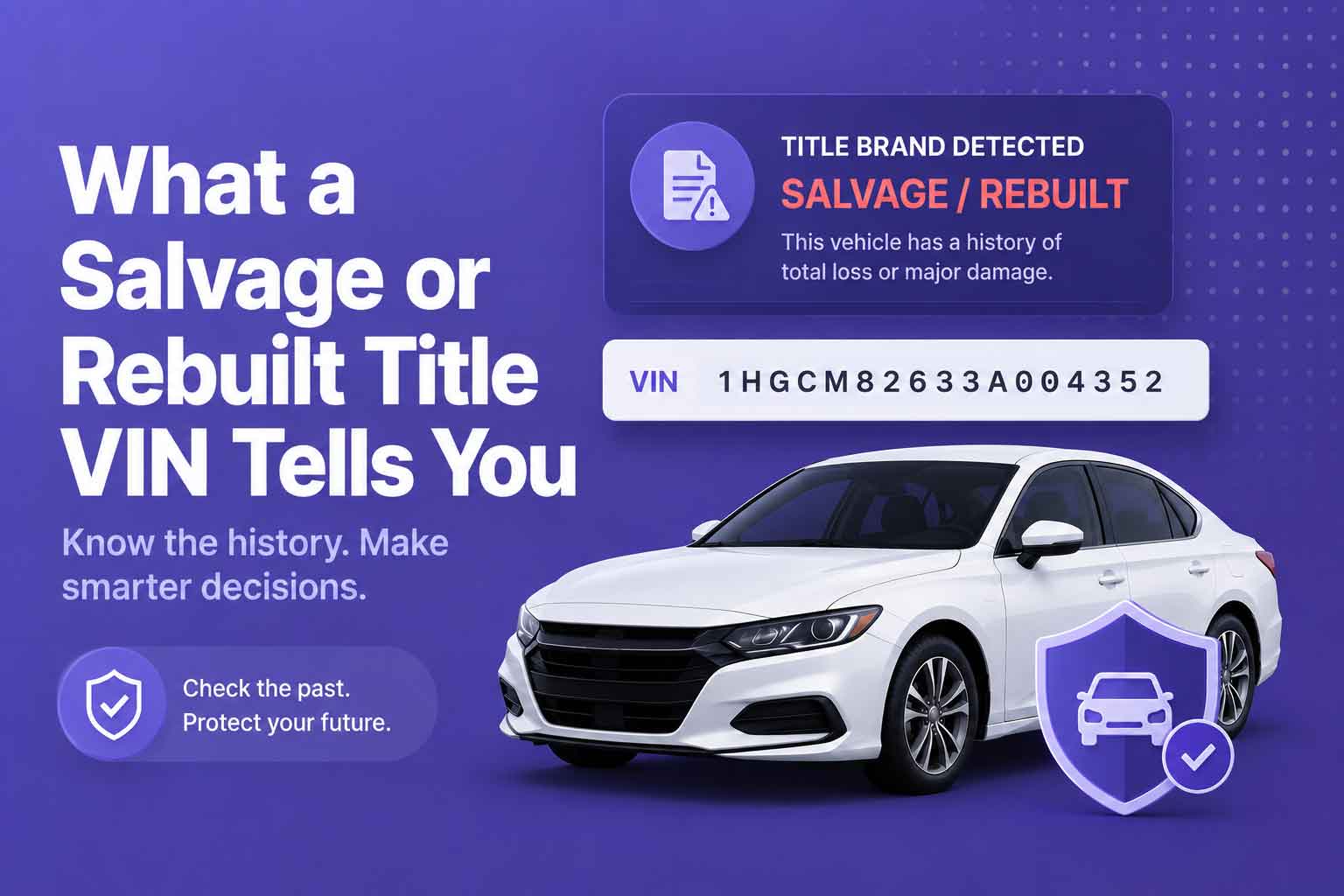
A salvage title can knock thousands off a car’s value, and the seller does not always mention it. The VIN is how you find out. The number itself does not change when a car is totaled, but the title brand attached to that VIN gets recorded, and a quick lookup pulls it up. Here is what salvage and rebuilt titles mean, and how the VIN exposes them before you hand over money.
Salvage vs. Rebuilt: The Difference
Both start the same way. An insurer declares a car a total loss, usually after a crash, flood, fire, or theft where the repair cost passes a set share of the car’s value. That car gets a salvage title. A salvage car is not road legal and cannot be registered as-is.
If someone buys that salvage car, repairs it, and passes a state inspection, it can earn a rebuilt (or reconstructed) title. A rebuilt car is road legal again, but the brand stays on its record forever. So:
- Salvage = declared a total loss, not yet repaired or inspected.
- Rebuilt = a former salvage car, repaired and inspection-passed.
Either way, the car carries a permanent mark that follows the VIN.
The VIN Does Not Change, But the Record Does
Here is the part people get wrong. A car’s VIN is stamped at the factory and never changes, even after a total loss. What changes is the title brand recorded against that VIN in state and national databases.
So you cannot spot a salvage car by reading the VIN characters. You spot it by looking the VIN up. The number is the key that opens the title history. Decode the basics first with our VIN Decoder to confirm the number matches the car, then run a history check for the title brand.
How to Check a Title Brand by VIN
A few sources track title history:
| Source | What it shows |
|---|---|
| NMVTIS | The national title database: salvage, junk, flood, and brand records |
| State DMV | Title status in that state |
| Paid history reports | Title brands plus accidents and ownership in one place |
In the United States, the National Motor Vehicle Title Information System pulls title brands from every state into one record. A paid history report reads from the same data and adds context. Either way, you feed it the VIN and it tells you whether the car has ever been branded salvage, rebuilt, flood, hail, or junk.
Why It Matters Before You Buy
A rebuilt car can be a fine deal if it was repaired well, but the risks are real:
- Hidden damage. Frame, airbag, and electrical problems do not always show.
- Lower value. A rebuilt car is worth far less than a clean-title equal, and it stays that way at resale.
- Insurance and financing hurdles. Many lenders will not finance a rebuilt car, and full coverage can be harder to get.
None of that is a reason to walk automatically. It is a reason to know before you pay, so the price reflects the title.
Watch for Title Washing
Some sellers try to hide a brand by moving a car between states, hoping the mark drops off in the paperwork. This is called title washing. A national check like NMVTIS is harder to fool than a single state record, which is why you check the VIN against the national database, not just the local title. If the seller’s title looks suspiciously clean for a car with obvious repairs, dig deeper. Our guide on how VIN cloning scams work covers related tricks to watch for.
The Bottom Line
The VIN will not tell you a car was totaled just by looking at it. It will tell you the moment you run it through a title check. Confirm the number matches the car, pull the title history, and let the brand, or the clean record, set your expectations before you buy.
Keep Reading
- How to Check If a Car Is Stolen Using the VIN
- How VIN Cloning Scams Work (and How to Protect Yourself)
- What a VIN Tells You: Decoding Make, Model, and Year
- How to Check If a VIN Is Valid (and Spot a Cloned One)
Free VIN tools: VIN Generator · VIN Decoder · VIN Validator · Bulk Generator · QR Code Generator · Visualizer